
Understand the changes
AI, automation, platform work and the changing realities of labour mobility.
Stay & Shape / Conference series 2026
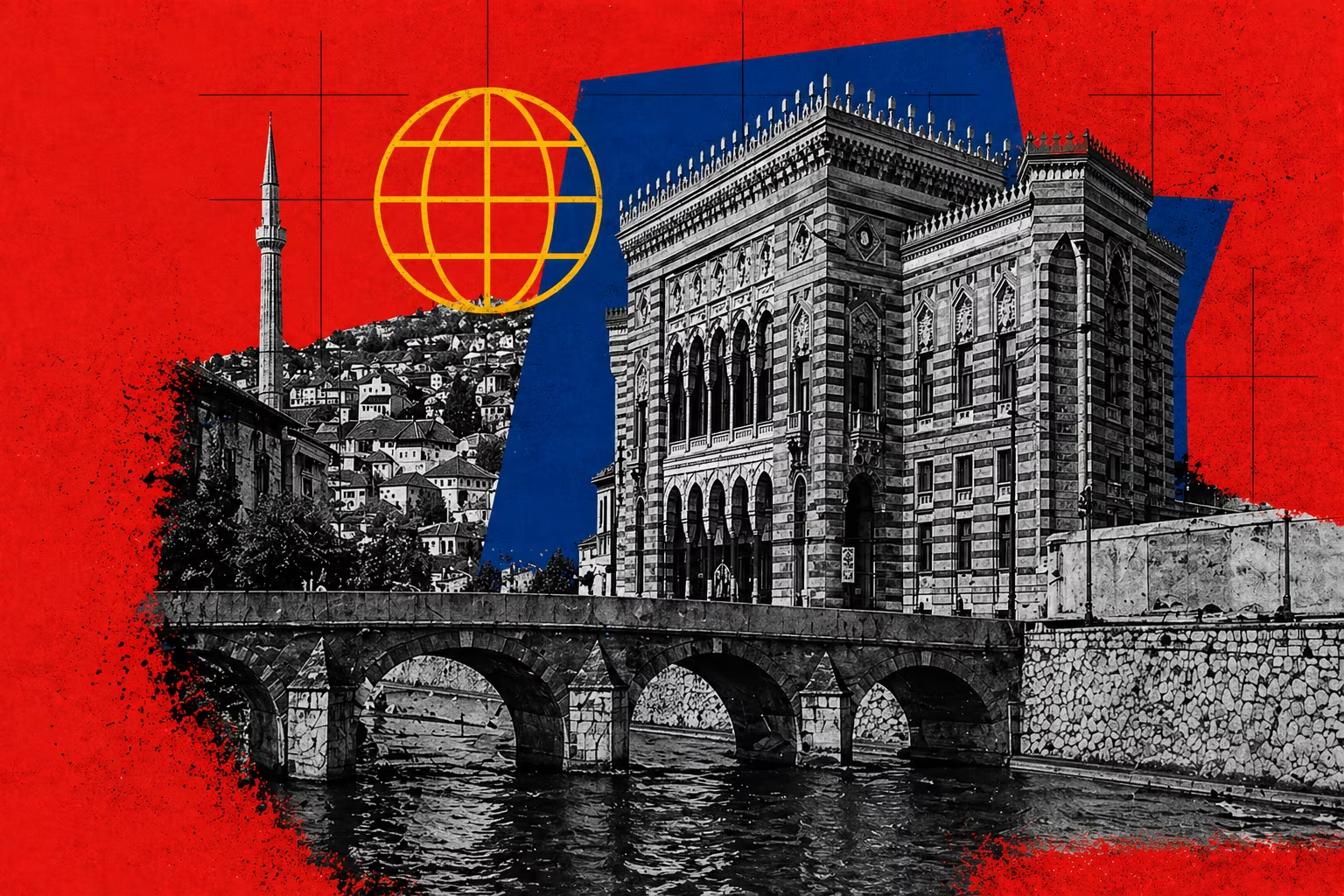
Sarajevo 22—23.10.2026
Work, Migration and Technology
The Balkans in focus.
Two days to explore how technology and migration are changing work — and who gets to shape what comes next.
Registration hosted by Friedrich-Ebert-Stiftung
01 / The conversation
Technology is changing how we work. Migration is changing who works, where, and under which conditions. In the Balkans, these transformations are happening together.
This conference brings researchers, trade unions, civil society, technology centres, start-ups, businesses and political actors into the same conversation — connecting regional experiences with European and global perspectives.
AI, automation, platform work and the changing realities of labour mobility.
Discover regional research, technologies and start-ups at the interactive innovation bazaar.
Explore power, workers’ rights and the choices shaping the future of the Balkans.
02 / The programme
Draft programme Sessions and speakers are subject to change.
Thursday · 22 October
Technology, mobility and the people driving change.
Digitalisation, AI, automation, platform work and remote work: what is changing already, and what is still emerging? This keynote explores how Balkan economies and workers are positioned within wider European and global technological transformations.
Economist at the Vienna Institute for International Economic Studies (wiiw), covering the Western Balkans and serving as country expert for North Macedonia and Serbia. His work spans economic development, inequality, social policy and labour rights. He previously advised North Macedonia’s Minister of Finance and worked at its National Bank.
How are demographic change, emigration, labour shortages and precarious employment connected to technological change? Explore migration for work and cross-border employment made possible by technology, without physical migration.
Researcher focusing on the social impact of human-computer interactions and digital disruptions. Her interests include how digital technologies and AI shift labour divisions and power dynamics. She created Fusing Futures, a podcast on the digital economy and society, recognised in 2019 among the Western Balkans’ most innovative media content.
Meet organisations working at the intersection of technology, migration and labour. The interactive bazaar combines demonstrations of relevant technologies and tools with examples of start-ups and emerging innovation ecosystems from the region.
Who is driving digital transformation in the Balkans, who benefits, and who carries the risks? Are governments regulating technology or responding to changes driven by business and investment? And where are workers and trade unions in these processes?
Friday · 23 October
Future scenarios, social protection and the choices ahead.
From human augmentation and job transformation to highly automated production, humanoid robots and “dark factories”: explore how emerging technologies are changing the relationship between people and machines. What kind of future are we building, and who gets to shape it? Speaker to be announced.
Ageing populations, labour shortages, migration and technological change are reshaping Europe’s social model. This session considers how women and men are affected differently, which workers are most exposed to automation and precarious employment, and how social protection, skills and lifelong learning can adapt. Who should bear the costs of transition?
Assistant Professor in the Department of Public and Social Policy, Faculty of Social Sciences, Charles University in Prague. Previously, she was a researcher at the Center for Social Research Analitika, which she joined in 2009.
Trade unions, political actors and technology-sector representatives bring together the conference’s two central themes. With a political and local focus, they will debate the consequences for workers, economies, social and labour rights, and the future of the region.
All times are local to Sarajevo. Open a session for its description and available speaker biography.
03 / Plan your visit
Two days, in person. Here are the essentials.
Questions? Contact FES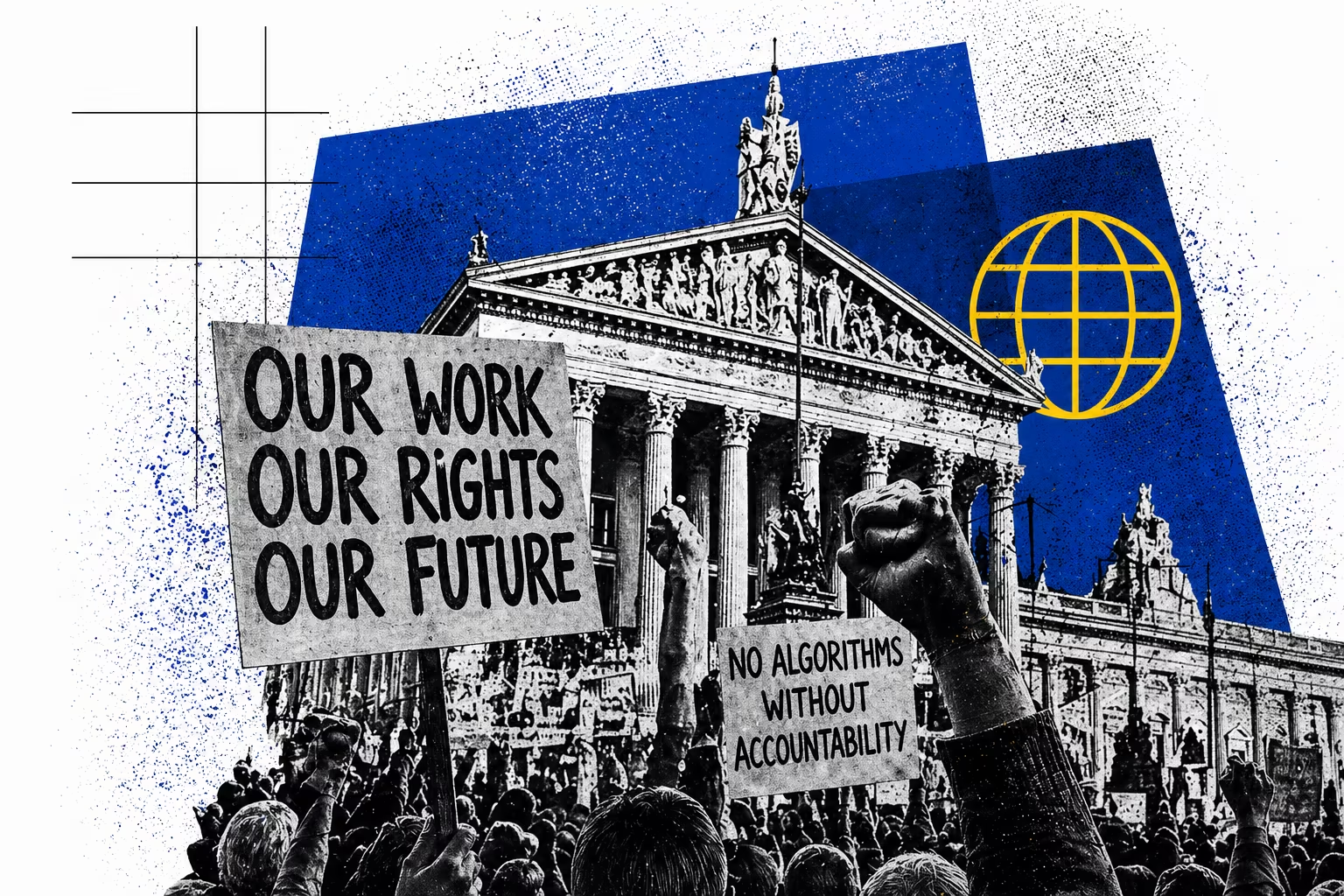 The series continues
04 / Previously in the series
Vienna · 18–19 June 2026
The Vienna programme focused on young workers, strong institutions and digital rights, with workshops on the Austrian model, organising, and the future labour market.
Sarajevo continues the conversation, bringing migration, technology and the future of work in the Balkans into focus.
Discover the next chapter05 / Join the conversation
Sarajevo · 22–23 October 2026
Registration is hosted by Friedrich-Ebert-Stiftung. You will continue to the FES website to enter your details and select your attendance days.